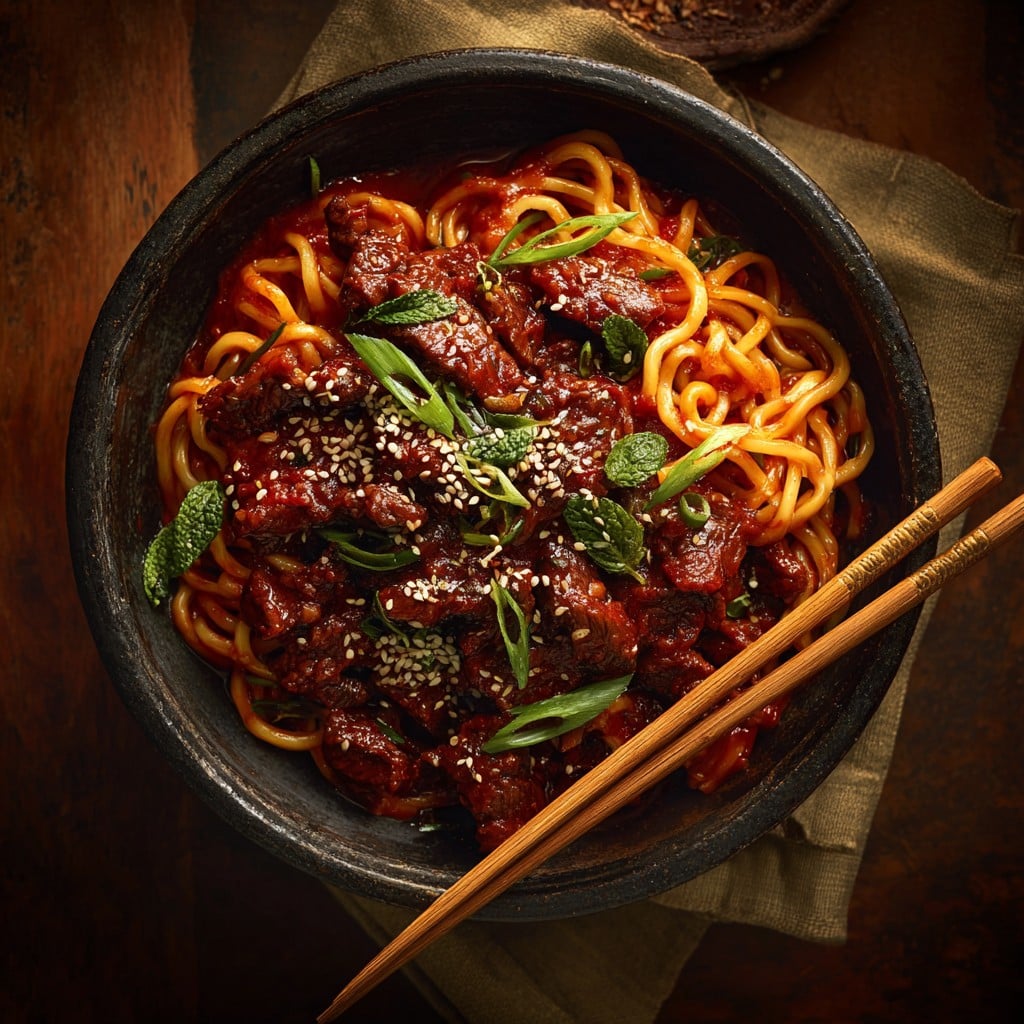
Spicy Korean Gochujang Beef Noodles
Spicy Korean Gochujang Beef Noodles is a sensational dish that brings together the bold flavors of Korea in a comforting bowl of tender beef, chewy noodles, and a fiery, umami-rich sauce.
Featuring the beloved gochujang (Korean chili paste), these noodles are a testament to Korea’s dynamic culinary heritage, where spice, heat, and deep savoriness unite. Gochujang has been a staple in Korean households for centuries, adding a punch of flavor to everything from stews to marinades.
Here, it’s combined with savory soy sauce, nutty sesame oil, and fragrant garlic and ginger, creating a harmonious blend that clings beautifully to beef and noodles. This dish has gained global popularity, not only for its signature heat and depth of flavor but also for its versatility.
Spicy Korean Gochujang Beef Noodles can be adjusted to fit various spice levels and incorporated into weeknight dinners or special occasions.
The fusion of textures and robust aromas, together with the impressive nutritional benefits of gochujang, beef, and vegetables, make this dish a favorite among food lovers seeking an exciting taste adventure.
Whether you’re a fan of Korean cuisine or simply looking for a new noodle recipe to spice up your rotation, Spicy Korean Gochujang Beef Noodles is the perfect dish to satisfy your cravings and introduce you to the wonders of Korean flavors.
Ingredients
- 8 oz (225 g) beef sirloin or ribeye, thinly sliced
- 8 oz (225 g) thick wheat or udon noodles
- 2 tablespoons gochujang (Korean chili paste)
- 1 tablespoon soy sauce
- 1 tablespoon sesame oil
- 2 teaspoons brown sugar
- 3 cloves garlic, minced
- 1 tablespoon ginger, grated
- 1 tablespoon vegetable oil
- 1 medium onion, sliced
- 1 red bell pepper, sliced
- 1 carrot, julienned
- 2 cups baby spinach or bok choy leaves
- 2 green onions, sliced
- 1 tablespoon toasted sesame seeds
- Salt and pepper to taste
Instructions
- In a small bowl, mix together gochujang, soy sauce, sesame oil, and brown sugar to create the sauce, then set aside.
- Bring a large pot of water to the boil and cook the noodles according to package instructions. Drain and set aside.
- Heat vegetable oil in a large wok or skillet over medium-high heat. Add the sliced beef, season lightly with salt and pepper, and stir-fry until just browned, then remove and set aside.
- In the same pan, add the onion, red bell pepper, carrot, garlic, and ginger. Stir-fry for 3–4 minutes until the vegetables are softened yet crisp.
- Add the cooked beef back to the pan along with the gochujang sauce. Toss well to coat all the ingredients evenly.
- Add in the drained noodles and spinach (or bok choy). Stir everything together for 2–3 minutes until the noodles are heated through and the sauce coats all components.
- Taste and adjust seasoning if needed. Transfer the noodles to serving bowls.
- Garnish with sliced green onions and a generous sprinkle of toasted sesame seeds. Serve hot.

Nutritional Information
Spicy Korean Gochujang Beef Noodles packs a hearty nutritional profile powered by its main ingredients. Lean beef offers plenty of protein essential for muscle maintenance and satiety, while noodles provide sustained energy from their carbohydrate content.
The gochujang sauce, a fermented chili paste, brings more than just heat; it’s filled with probiotic benefits that support gut health and digestion.
The addition of fresh vegetables like bell peppers, carrots, and leafy greens not only amplifies the dish’s color and texture but also enhances its fiber and vitamin count.
For an average serving (one quarter of the prepared dish), you can expect roughly 480–520 calories, 28–32 grams of protein, 12–15 grams of fat (from beef and sesame oil), and 60–65 grams of carbohydrates.
The sodium content is moderate due to the soy sauce and gochujang but can be managed with low-sodium options. It’s a well-rounded meal, supplying iron, vitamin C, and antioxidants from the fresh produce, as well as essential amino acids from beef.
The dish also offers a decent dose of calcium and magnesium, supporting bone health. Those watching their calorie or sodium intake can reduce oil or sauce amounts as needed.
Overall, Spicy Korean Gochujang Beef Noodles delivers flavor and balanced nutrition in every bite, making it a wholesome meal choice for lunch or dinner.
Wine and Beverage Pairings
The bold, spicy flavors of Spicy Korean Gochujang Beef Noodles pair wonderfully with beverages that can balance heat and richness. A crisp, off-dry Riesling or Gewürztraminer white wine complements the dish’s spiciness while refreshing the palate.
If you prefer red, opt for a light-bodied Pinot Noir or Beaujolais, which won’t overpower the delicate beef notes. For non-alcoholic options, chilled barley tea (bori-cha) or lightly sweetened iced green tea provide cool, mild flavors that counteract the spice and cleanse the palate.
Korean soju offers a traditional touch for those seeking authenticity, and a cold lager or pilsner type beer can also accentuate the dish’s savory elements. If you like it extra cooling, try a sparkling water with a squeeze of citrus to mellow the heat and keep your meal feeling light.

Cooking Tips and Variations
For the best Spicy Korean Gochujang Beef Noodles, slicing your beef as thinly as possible is crucial. It ensures quick, even cooking, and allows the slices to absorb more flavor from the marinade and sauce.
Place your beef in the freezer for 20 minutes prior to slicing to achieve paper-thin pieces. When it comes to noodles, chewy wheat or udon noodles work exceptionally well, but rice noodles or even soba can be substituted for a gluten-free or lower-calorie version.
If you find the dish too spicy or are serving children, reduce the gochujang to one tablespoon and add an extra teaspoon of brown sugar to balance the heat. Feel free to add or substitute vegetables according to seasonality or personal preference; mushrooms, zucchini, or snap peas make excellent additions.
For a vegetarian twist, replace beef with firm tofu or seitan, and use a plant-based protein sauce. The sauce can be made in advance and refrigerated for up to a week, helping you save time on busy nights.
Stir in a dash of rice vinegar for added zing, or sprinkle roasted peanuts for a crunchier texture. Garnishing with fresh herbs like cilantro or Thai basil can add an extra layer of freshness. For a gluten-free meal, use tamari instead of soy sauce and gluten-free noodles.
Finally, always taste and adjust your seasoning before serving to ensure the perfect balance of heat, savory, and sweetness.
Serving Suggestions
Spicy Korean Gochujang Beef Noodles shines as both a stand-alone main course and as part of a larger Korean-inspired dinner spread. For an inviting presentation, serve the noodles in generous bowls, garnished with fresh green onions and toasted sesame seeds to add vibrant color and nutty aroma.
You might also include a side of classic Korean banchan such as kimchi, pickled radish, or cucumber salad to offer contrasting flavors and textures. Steamed vegetable dumplings or a simple miso soup can round out the meal.
Use chopsticks for authenticity, and provide a soup spoon for scooping up extra sauce and vegetables. This dish is also ideal for potlucks or family gatherings, as it can be easily doubled or tripled in quantity and served in larger platters for everyone to share.
For individual servings, consider topping each bowl with a soft boiled or poached egg—this adds a creamy texture that tempers the spicy heat and makes the meal more luxurious. If you’d like extra crunch, a sprinkle of roasted peanuts or crispy fried shallots works wonderfully.
Serve the noodles hot out of the pan, but they also make a tasty cold noodle salad for leftovers. For a festive atmosphere, decorate the table with small bowls of extra gochujang or chili crisp for guests who want to turn up the heat.
The versatility and visual appeal of Spicy Korean Gochujang Beef Noodles makes it an outstanding choice for both casual dinners and special occasions.

Health Benefits
Spicy Korean Gochujang Beef Noodles not only delivers on taste but also brings numerous health benefits to your plate. The lean beef used in the recipe supplies high-quality protein, essential for tissue repair, muscle building, and sustained energy.
Gochujang itself is a fermented food, known for its probiotics and digestive-friendly microorganisms that support a healthy gut microbiome. The combination of colorful vegetables provides a mix of antioxidants, vitamins A and C for immune support, and dietary fiber that aids digestion and promotes fullness.
Sesame oil, utilized for its unique flavor, contains heart-healthy fats and sesamin, which has anti-inflammatory properties. Ginger and garlic, here used generously, are touted for their immune-boosting and anti-inflammatory effects. Fresh greens such as spinach or bok choy supply iron, magnesium, and potassium, essential for blood health and electrolyte balance.
Moreover, this meal can be easily adapted to suit various dietary needs, whether you’re looking to reduce calories, carbs, or sodium. Omitting or reducing the amount of sugar and oil, or swapping noodles for spiralized vegetables, transforms this into a lighter dish.
As part of a balanced diet, Spicy Korean Gochujang Beef Noodles delivers essential nutrients, variety, and plant compounds needed for optimal wellness.
Frequently Asked Questions
Absolutely! Reduce the amount of gochujang you use and increase the brown sugar slightly, or add a tablespoon of plain yogurt to mellow the heat.
Yes, you can prep the noodles, sauce, and vegetables in advance. Stir-fry everything together just before serving for the freshest flavor and best texture.
Thick wheat or udon noodles are ideal for their chewy texture, but rice noodles or even spaghetti can be substituted based on availability and dietary needs.
Yes, simply swap the beef for firm tofu, tempeh, or a plant-based meat alternative and use a vegetarian kimchi or gochujang without seafood ingredients.
Opt for low-sodium soy sauce and gochujang, and increase your proportion of fresh vegetables to dilute overall salt content.
Spicy Korean Gochujang Beef Noodles is a vibrant, flavorful, and easy-to-make meal that brings the best of Korean cuisine into your home kitchen. With its tender beef, springy noodles, spicy-sweet gochujang sauce, and array of fresh vegetables, this recipe checks all the boxes for a satisfying main course. Its versatility in ingredient choice and adaptability to different flavor levels means it can be enjoyed by everyone, regardless of how much spice you prefer. The health benefits, exciting textures, and eye-catching presentation make it perfect for both simple family dinners and special gatherings. This recipe isn’t just a meal—it’s a celebration of flavor that introduces a taste of Korea to your regular dinner rotation. Once you try Spicy Korean Gochujang Beef Noodles, you’ll find yourself craving these zesty, savory noodles again and again.
Ingredients
- 8 oz dried wheat noodles or udon noodles
- 1 lb (450g) beef sirloin, thinly sliced
- 2 tablespoons Gochujang (Korean chili paste)
- 2 tablespoons soy sauce
- 1 tablespoon sesame oil
- 2 teaspoons sugar
- 2 cloves garlic, minced
- 1 cup carrots, julienned
- 1 cup bell pepper, thinly sliced
- 2 green onions, sliced
- 1 tablespoon vegetable oil
- 1 teaspoon toasted sesame seeds (for garnish)
Instructions
-
1Cook the noodles according to package instructions. Drain and set aside.
-
2In a bowl, whisk together Gochujang, soy sauce, sesame oil, sugar, and minced garlic to make the sauce.
-
3Heat vegetable oil in a large skillet or wok over medium-high heat. Add the beef slices and cook for 2-3 minutes until browned.
-
4Add carrots and bell pepper to the skillet, stir-frying for another 2-3 minutes until the vegetables are tender-crisp.
-
5Pour the sauce over the beef and vegetables, then add the cooked noodles. Toss everything together until well coated and heated through.
-
6Garnish with sliced green onions and toasted sesame seeds before serving.
Approximate Information for One Serving
Nutrition Disclaimers
Number of total servings shown is approximate. Actual number of servings will depend on your preferred portion sizes.
Nutritional values shown are general guidelines and reflect information for 1 serving using the ingredients listed, not including any optional ingredients. Actual macros may vary slightly depending on specific brands and types of ingredients used.
To determine the weight of one serving, prepare the recipe as instructed. Weigh the finished recipe, then divide the weight of the finished recipe (not including the weight of the container the food is in) by the desired number of servings. Result will be the weight of one serving.
Did you make this recipe?
Please consider Pinning it!!