Juicy and Tender Pork Tenderloin
Juicy and Tender Pork Tenderloin is a beloved dish that graces many dinner tables around the world thanks to its superb flavor, lean profile, and succulent texture.
Pork tenderloin stands out as one of the most tender cuts of pork, naturally juicy when cooked properly and renowned for its versatility in the kitchen. Whether served at a family gathering, a festive holiday meal, or a casual weeknight dinner, this dish offers incredible satisfaction with minimal effort.
Historically, pork cuts like tenderloin have been cherished in various cuisines, from European to Asian traditions. This particular cut became popular because it cooks quickly yet maintains a delicate, delightful flavor profile.
Its mildness pairs well with a vast range of seasonings, from garlic and fresh herbs to bold spice blends and sweet glazes. The key to achieving juicy and tender pork tenderloin lies in proper seasoning, expert searing to lock in moisture, and attention to precise cooking temperatures.
As highlighted by culinary experts at Serious Eats, understanding pork cuts and their unique cooking properties is essential for the best results (https://www.seriouseats.com/guide-to-pork-cuts-5186740). In this comprehensive guide, we will reveal step-by-step instructions, expert tips, tasty variations, and everything you need to serve an outstanding dish that will impress friends and family alike.
Ingredients for Juicy and Tender Pork Tenderloin
- 1.5 to 2 pounds pork tenderloin (trimmed of silver skin)
- 2 tablespoons olive oil
- 1 tablespoon fresh rosemary, finely chopped (or 1 teaspoon dried rosemary)
- 1 tablespoon fresh thyme, finely chopped (or 1 teaspoon dried thyme)
- 3 cloves garlic, minced
- 1 tablespoon Dijon mustard
- 1 teaspoon kosher salt
- 1/2 teaspoon freshly ground black pepper
- 1 tablespoon balsamic vinegar
- 1 teaspoon honey (optional, for extra caramelization)
Instructions for Making Juicy and Tender Pork Tenderloin
- Preheat your oven to 400°F (200°C) while you prepare the pork tenderloin.
- Pat the pork tenderloin dry with paper towels to ensure a good sear, then trim any excess fat or silver skin if needed.
- In a small bowl, whisk together olive oil, rosemary, thyme, garlic, Dijon mustard, balsamic vinegar, honey (if using), salt, and pepper to form a marinade.
- Rub the marinade generously over the surface of the pork tenderloin, ensuring even coverage. Let it marinate for at least 15 minutes (up to 2 hours in the refrigerator for deeper flavor).
- Heat a large oven-safe skillet over medium-high heat. Add a splash of olive oil and sear the tenderloin on all sides for about 2-3 minutes per side until golden brown.
- Transfer the skillet with the seared pork tenderloin to the preheated oven. Roast for 15-20 minutes, or until the internal temperature reads 145°F (63°C) using a meat thermometer.
- Remove the pork from the oven and transfer to a cutting board. Tent loosely with foil and let it rest for 5-10 minutes for juices to redistribute.
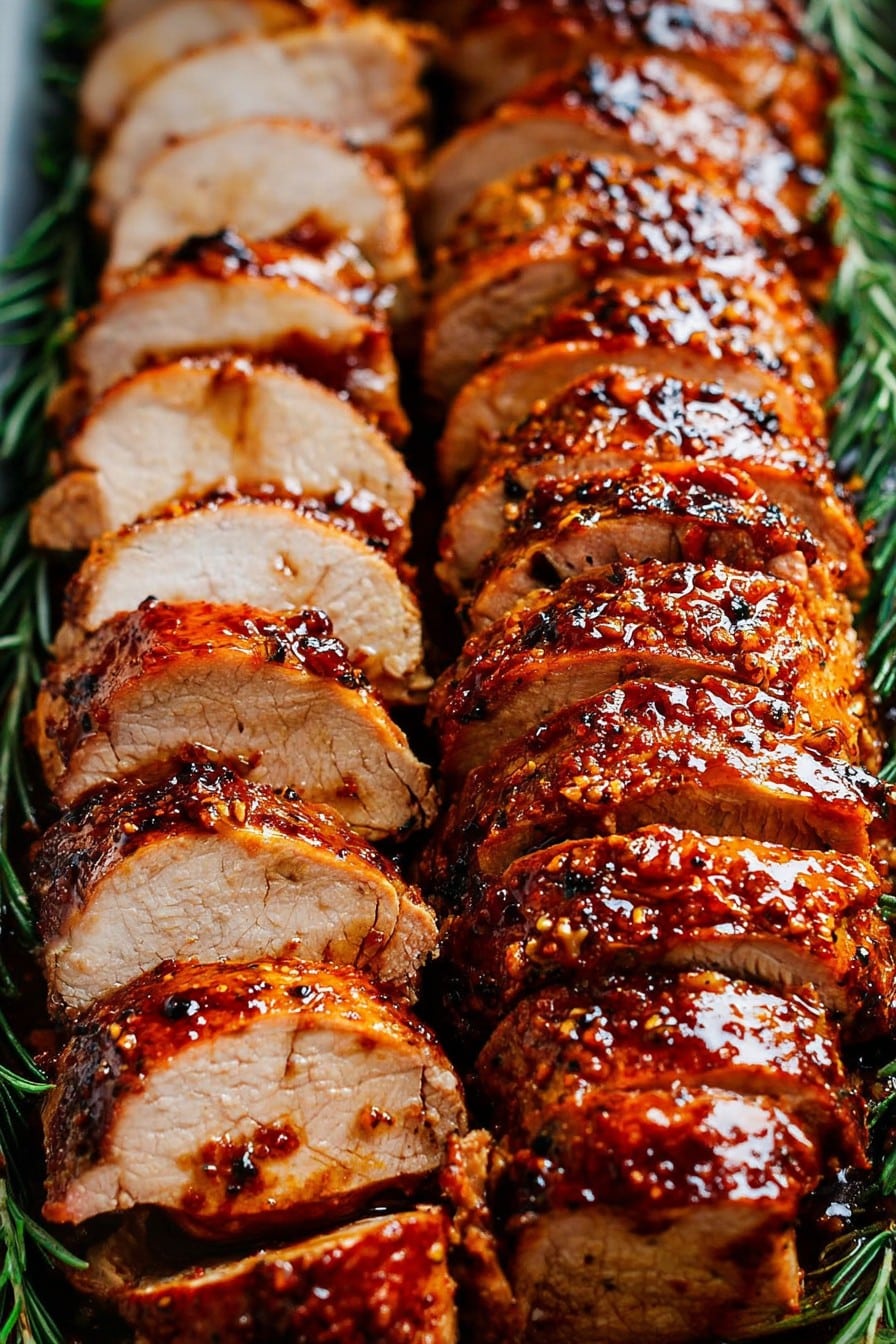
- Slice the pork tenderloin into medallions, drizzle with any pan juices, and serve immediately with your choice of sides.
Nutritional Information
Juicy and Tender Pork Tenderloin is a healthy and satisfying protein option. A 4-ounce (113g) serving of cooked pork tenderloin contains approximately 150 calories, 3g fat, and 26g protein, with very minimal carbohydrates.
This makes pork tenderloin leaner than many other meat cuts, making it suitable for those watching their calorie or fat intake.
In addition to being rich in high-quality protein, pork tenderloin is an excellent source of B vitamins, including thiamine, niacin, and vitamin B6, all of which support metabolism and muscle health. Pork also provides essential minerals like phosphorus, selenium, and zinc, vital for immune function and bone health.
Cooking pork to the recommended internal temperature, as suggested by the USDA (https://www.fsis.usda.gov/food-safety/safe-food-handling-and-preparation/meat/cooking-meat), ensures safety while preserving juiciness. When paired with wholesome sides like roasted vegetables or a fresh salad, this dish offers a balanced meal bursting with nutrients.
Opting for olive oil and fresh herbs adds heart-healthy fats and antioxidants, enhancing both flavor and nutritional value (https://www.healthline.com/nutrition/foods/pork). Overall, this recipe for juicy and tender pork tenderloin is a wholesome, nutrient-dense choice perfect for any occasion.
Wine/Beverage Pairings With Juicy and Tender Pork Tenderloin
For an exquisite dining experience with juicy and tender pork tenderloin, consider wine or beverage pairings that complement its mild yet savory profile. A light-bodied red wine such as Pinot Noir features bright acidity and subtle fruitiness that accentuates the pork’s flavors without overpowering it.
Alternatively, a chilled Chardonnay presents a creamy texture and balanced oak notes that pair beautifully with herbaceous or mustard-based marinades. If you prefer a non-alcoholic option, sparkling apple cider or a lightly sweetened iced tea add a refreshing counterpoint to the savory meat.
For a robust twist, experiment with dry rosé or a Belgian-style wheat beer, each offering enough complexity to match the sophisticated notes of the pork tenderloin.
Cooking Tips and Variations
Achieving perfectly juicy and tender pork tenderloin every time requires a few tried-and-true techniques. First, always start with a fresh, well-trimmed pork tenderloin; removing the silver skin ensures even cooking and improved texture. Marinating the pork not only infuses it with flavor but also promotes moisture retention.
If time allows, marinate the pork for up to two hours for a deeper flavor profile. For the searing step, ensure your pan is hot before adding the meat, as this helps develop a delightful crust—just enough to seal in the natural juices.
A crucial tip is never to overcook pork tenderloin. Remove it from the oven as soon as it reaches an internal temperature of 145°F (63°C). Carry-over cooking during resting will bring it up to the perfect doneness.
Letting the pork rest before slicing allows juices to redistribute, keeping every bite tender. Variations abound: rub with smoked paprika and cumin for a Southwestern flair, use Asian-inspired marinades with soy sauce and ginger, or try a maple-mustard glaze for a hint of sweetness.
If you’re grilling, set up a two-zone fire to get a good sear, then finish over indirect heat. Always slice the tenderloin across the grain for maximum tenderness.
Serving Suggestions
Serving juicy and tender pork tenderloin can transform any meal into a memorable event. For a classic presentation, arrange pork medallions on a warm platter and drizzle with the flavorful pan juices collected during roasting.
To add a burst of color and nutrition, serve alongside roasted seasonal vegetables such as carrots, asparagus, or Brussels sprouts. A creamy potato gratin or rustic mashed potatoes harmonizes gorgeously with the herb-infused pork.
For a lighter touch, pair with a crisp green salad tossed with vinaigrette and shards of Parmesan. Consider offering crusty artisan bread to soak up every drop of savory sauce.
For a gourmet touch, add a spoonful of spiced apple compote or cranberry chutney, as their tart sweetness beautifully compliments the pork’s richness. When entertaining, present the tenderloin whole on a wooden carving board, allowing guests to admire the golden crust before slicing.
No matter the occasion, vibrant sides and thoughtful garnishes enhance both visual appeal and flavor balance, making your juicy and tender pork tenderloin the centerpiece of the table.
Juicy and Tender Pork Tenderloin Health Benefits
Juicy and Tender Pork Tenderloin is not only delectable but also offers an array of health benefits. Its leanness makes it perfect for those seeking a high-protein, low-fat meal without sacrificing flavor. High protein content supports muscle maintenance and satiety, which can aid in healthy weight management.
The B vitamins present in pork tenderloin support energy production and nervous system health, while minerals like selenium and zinc contribute to immunity and antioxidant defenses. Using heart-healthy olive oil and aromatic herbs in your preparation further enhances nutritional value by providing monounsaturated fats and beneficial plant compounds.
Choosing pork tenderloin over fattier cuts reduces saturated fat intake, which aligns with dietary recommendations for heart health. When paired with fiber-rich vegetables and whole grains, this dish forms a balanced, nutrient-dense meal suitable for most dietary needs.
FAQs About Juicy and Tender Pork Tenderloin
How do I keep pork tenderloin juicy and tender?
To keep pork tenderloin juicy and tender, avoid overcooking by using a meat thermometer and removing it from the oven at 145°F. Letting it rest before slicing ensures the juices redistribute, preventing dryness.
Can I prepare pork tenderloin ahead of time?
Yes, you can marinate the pork tenderloin up to a day in advance and store it covered in the refrigerator. Sear and roast just before serving for the best texture and flavor.
What sauces pair well with juicy and tender pork tenderloin?
Pork tenderloin pairs well with a variety of sauces, such as apple chutney, mustard cream sauce, balsamic reduction, or a simple pan gravy made from the roasting juices.
Is pork tenderloin considered lean meat?
Yes, pork tenderloin is one of the leanest cuts of pork, similar in leanness to skinless chicken breast, making it an excellent choice for health-conscious eaters.
Can I grill pork tenderloin instead of roasting?
Absolutely. Sear the pork tenderloin over direct grill heat, then cook over indirect heat until the internal temperature reaches 145°F, ensuring juicy and tender results.
Juicy and Tender Pork Tenderloin remains a timeless favorite for home cooks seeking a flavorful, healthy, and elegant centerpiece for any meal. With the right blend of marinade, searing, and proper roasting, achieving restaurant-quality results at home is entirely within reach. The techniques and variations explored in this guide ensure that your pork tenderloin will always be moist, flavorful, and impressive, whether you're cooking for one or entertaining a crowd. Paired with colorful vegetables, thoughtfully chosen wines, and wholesome grains, this pork tenderloin recipe is sure to become a frequent request at your table. Enjoy creating delicious memories one juicy, tender bite at a time.
Ingredients
- 1 1/2 pounds pork tenderloin, trimmed
- 2 tablespoons olive oil
- 1 teaspoon salt
- 1/2 teaspoon black pepper
- 1 teaspoon garlic powder
- 1 teaspoon dried thyme
- 1 teaspoon smoked paprika
- 1 tablespoon Dijon mustard
Instructions
-
1Preheat your oven to 400°F (200°C). Pat the pork tenderloin dry with paper towels.
-
2In a small bowl, mix together salt, black pepper, garlic powder, dried thyme, and smoked paprika.
-
3Rub the tenderloin evenly with olive oil, then coat with the spice mixture, pressing gently to adhere. Spread Dijon mustard over the surface.
-
4Heat an oven-safe skillet over medium-high heat. Sear the pork tenderloin on all sides until browned, about 2-3 minutes per side.
-
5Transfer the skillet to the preheated oven. Roast for 15-20 minutes, or until the internal temperature reaches 145°F (63°C).
-
6Remove from the oven, cover loosely with foil, and let rest for 5 minutes before slicing and serving.
Approximate Information for One Serving
Nutrition Disclaimers
Number of total servings shown is approximate. Actual number of servings will depend on your preferred portion sizes.
Nutritional values shown are general guidelines and reflect information for 1 serving using the ingredients listed, not including any optional ingredients. Actual macros may vary slightly depending on specific brands and types of ingredients used.
To determine the weight of one serving, prepare the recipe as instructed. Weigh the finished recipe, then divide the weight of the finished recipe (not including the weight of the container the food is in) by the desired number of servings. Result will be the weight of one serving.
Did you make this recipe?
Please consider Pinning it!!